
May 28, 2026
Below are the Contents of our current ABL Healthcare Online News & Trendletter
Click on Specific Headlines to Read Specific Articles
HEALTHCARE MEMBER NEWS
-
- Alameda Hospital (Peter Hohl) Earns Top Honors in Patient Safety for the Alameda Health System (Dave Sayen)
- Alvarez & Marsal (Mike Epstein) Expands AI Capabilities & Discusses Health Regulatory News
- Choice in Aging: CEO Debbie Toth to Address Upcoming Summit & “AI for Caregivers” Workshop Announced
- City of Hope (Marcee Chmait) to Host Upcoming Value-Based Cancer Care Collaborative & Recently Presented Symposium Featuring HHS Secretary RFK Jr. & NIH Director Jay Bhattacharya
- Donor Network West (Janice Whaley, Ph.D.) Releases Annual Report Highlighting Life-Saving Impact Across Northern California & Northern Nevada; Also to Host Golf Tournament on June 29
- Eitan Medical (Roger Massengale) Awarded “Best Overall Connected Healthcare Solution” in 2026 MedTech Breakthrough Awards
- El Camino Health (Cecile Currier): Honored for Role in Pioneering Healthcare Technology; Named to Newsweek’s World’s Best Hospitals 2026; & Unveils “Family First” Hospital OB Expansion
- Elemeno Health CEO Arup Roy-Burman Stresses Need for Good Data in Healthcare AI
- FOMAT Medical (Nick Focil) Becomes Largest Embedded Research Organization in the U.S. with Recent Acquisition
- Leech Tishman Nelson Hardiman’s Harry Nelson, JD, Named a Distinguished Leader + Interviewed on CBS News L.A. & Comments on Health Law Issues
- Makani Science CEO Greg Buchert, MD, Featured in “The USA Leaders Building America”
- PreludeDx (Dan Forche) Receives FDA Breakthrough Device Designation for AidaBREAST
- Sheppard (Linda Igarashi) Provides Insights on Health Law News & Trends
ABL-TECH MEMBERS’ HEALTHCARE NEWS
-
- Dave Berkus Extols CEO Roundtables Like ABL
- Eckert & Ziegler (Frank Yeager) Secures Patient Access to Critical Eye Cancer Treatment with MDR Certification
- GIDEON Informatics (Uri Blackman) Adds New Clients & Explains All About Hantavirus
- Adam Miller Endorsed by Los Angeles Daily News & More
- John Tanner’s NuSci to Present Nutrition Health Workshops in June & July
HEALTHCARE INDUSTRY NEWS & TRENDS
HEALTHCARE & GOVERNMENT
- CMS Finalizes Major Changes to ACA Exchanges, Effective 2027
- CMS Taps 150 Digital Health Companies & Providers for ACCESS Model
- CMS Moves to Rein in Misused Medicaid Dollars & Reward Quality Care
- Two-Thirds of Health Leaders Concerned About Medicare, Medicaid Cuts’ Impact on Business Operations
- CMS Announces Six-Month Hospice & Home Health Agency Enrollment Moratoria
- Makary’s FDA Reforms ‘Continue to Move Forward’ Despite Leadership Turmoil
PAYER NEWS
- UnitedHealth to Make It Easier for Patients to Get a Range of Procedures
- States Target Insurers Over Prior Authorizations, Provider Pay
- California Hospitals Sue Anthem Over Out-Of-Network Care Policy
- Providence to Shut Down Most Insurance Businesses for 2027
AI, MEDTECH & BREAKTHROUGHS
- KFF Examines AI’s Role in Claims Review and Prior Authorization
- In Harvard Study, AI Offered More Accurate Emergency Room Diagnoses Than Two Human Doctors
- How to Learn Claude Code for Free with Anthropic’s AI Courses
- AI Sepsis Tools are Gaining Traction
- Google Launches $9.99-Per-Month AI Health Coach & Renames Fitbit App to Google Health
- Medical Device Makers Diving into Ambulatory Surgery Center Market
- Advocate Health to Launch ‘Nation’s Largest’ Hospital Drone Delivery Program
- Epic Grows EHR Footprint Among Small Health Systems Even as Overall Market Sales Decline in 2025
- How an ‘Impossible’ Idea Led to a Pancreatic Cancer Breakthrough
HEALTHCARE CAREERS
JUNE ABL HEALTHCARE ZOOM TABLES
- 6/3 – First Wednesday ZOOM Table – Discussion Topic: “How Is AI Catching Fire in Your Health/Tech Business – And Who’s Lighting the Match?” – featuring Roger Massengale, Eitan Medical
- 6/18 – Third Thursday ZOOM Table – Discussion Topic: “Tapping Youthful Super Stars to Grow Your Organization” – featuring Debbie Toth, Choice in Aging

Blog by Mimi Grant, President of ABL Organization
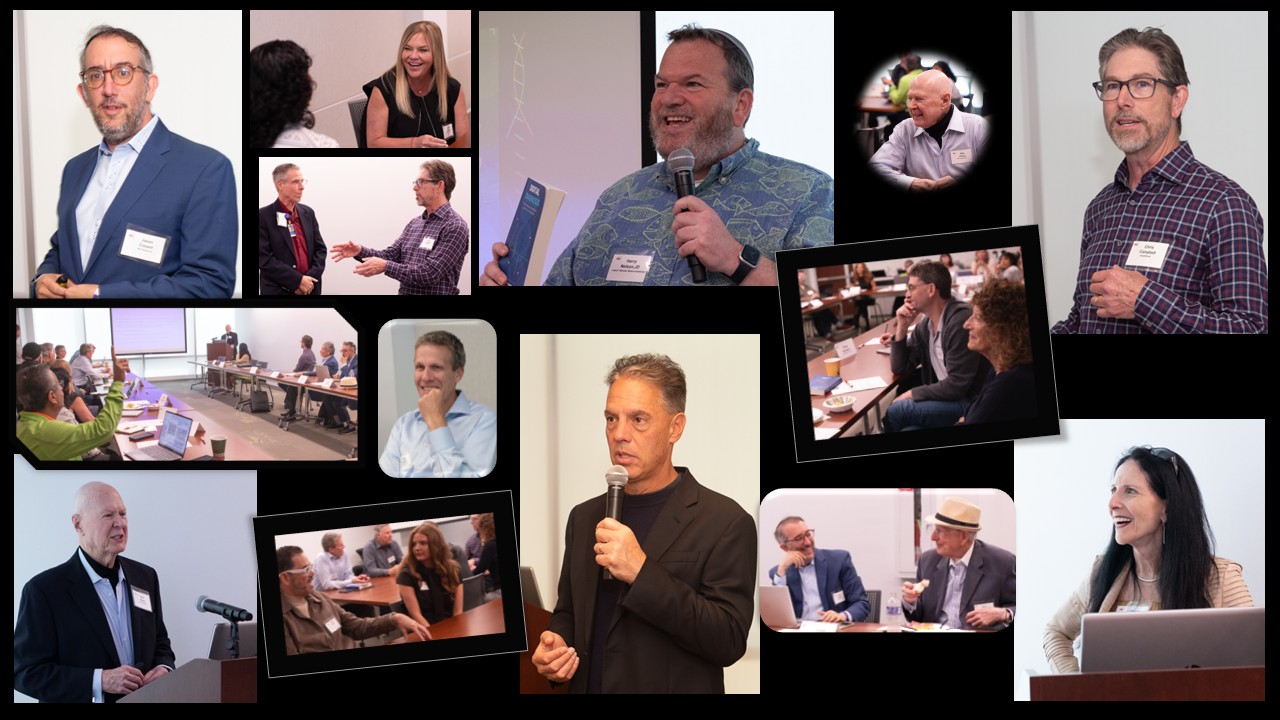
The PRESENTATION SLIDES from ABL’s “How AI is Accelerating Outcomes in Business, Healthcare and Government” (held in person on 4/22/26) are now available on the password-protected “MEMBERS ONLY” section of the ABL Website, under “Presentations.”
The event featured Adam Miller, candidate for Mayor of Los Angeles; Jason Ciment of Get Visible; Chris Campbell of AssetSmart; and Harry Nelson of Leech Tishman Nelson Hardiman, who also served as our host – many thanks!

With thanks to Debbie Toth for sharing this inspirational story about EPIC’s Judy Faulkner…
She asked her children what they needed most. They said, “food and money.” She said, “No – roots and wings.” Then she pledged to give away $7.7 billion to help others have both.
Judy Faulkner is 82 years old. She’s worth $7.8 billion. And she’s never cashed a single share of her company for herself.
In 1979, Faulkner started a company called Human Services Computing from a basement in Madison, Wisconsin. She had $70,000 from friends and family, two part-time employees, and a computer the size of a washer-dryer.
She wrote the original code herself.
Her goal was simple: create software that could track patient medical records – and keep people from falling through the cracks of a fragmented healthcare system.
That basement startup became Epic Systems. Today, Epic holds the medical records of more than 325 million patients and serves roughly half of all hospital beds in the United States. The company generates $5.7 billion in annual revenue.
And Judy Faulkner still runs it… Click Here to Read Rest of Post https://www.abl.org/A/EpicJudyFaulkner.htm
“The Thinking Game” Is Now Available to See, Enthrall and Inspire You on YouTube
The documentary concludes with the words, “In 2024 Demis Hassabis and John Jumper were awarded the Nobel Prize in Chemistry for protein structure prediction.” The previous 80 minutes masterfully tell the story of Demis, the 4-year old chess prodigy, who became a self-taught programmer/ game developer, at 8. In 2010, he founded DeepMind, as an AI startup, to “solve intelligence” and then use intelligence “to solve everything else.” Since its acquisition by Google, in 2014, it’s remained an independent entity based in London, known for its impressive firsts: creating AlphaGo that defeated several world Go champions, reducing the energy used to cool Google’s data centers by 40%, partnering with the NHS to improve medical services and identify the onset of degenerative eye conditions. Plus, AlphaFold, which predicted the 3D structure of a protein from its 1D amino acid sequence. Later, DeepMind created AlphaFold2 to fold all 200 million proteins known to science, and made the system and these structures open, freely available for anyone to use. Already, the impact for pharma is faster drug target identification and improved understanding of disease mechanisms.
VIDEOS of the PRESENTATIONS from ABL’s “Putting AI Agents to Work Profitably” are now available on the password-protected “MEMBERS ONLY” section of the ABL Website, under “Presentations.”
Here is what they include:
Mimi Grant of ABL Organization – shared how far movie-making has come since the first blockbuster, The Great Train Robbery (1903), to the 2023 Writers Guild and Screen Actors Guild strikes (for fear of AI’s impact on their jobs), to The Heist (2025), which illustrated how using Google’s Veo 2 and frame-by-frame prompting could create an exciting 1:56 “film” – using no cameras, actors, sets, props, post-production FX, or cleanup.
Anant Singh of Sanas – introduced a typical Customer Service Rep, with a distinct Filipino accent, could be easily understood by someone used to communicating with a Midwestern American accent. Teleperformance, where Reps handle over 5 million calls daily, is fully deploying Sanas’s AI technology, which enables users to change their accents, tone, or speech style – and mute their background noise – during live customer calls.
Marshall Toplansky of Chapman University – as Chapman University’s Innovation Professor, is applying AI to evaluate how well students “get” new information – as they’re learning it, not just on a later test. He’s also using AI in his classes to provide students with Individualized feedback, which enhances retention and analytical success. AI’s automated grading and feedback also streamlines professors’ workloads, too.
Dave Berkus of iMediSync Americas + Multiple Portfolio Companies – trained his own Small Language Model (SLM) – on all his books, blogs, vlogs, and posts, to answer anything about his insights And then taught us what SLMs are, their benefits – and limitations, along with examples of SLMs (besides his own). He even shared how SLMs can replace LLMs for specific tasks, and wrapped up demonstrating the Berkus SLM.
Ken Neeld of Delphi Display, a Toast Company – shared how Toast is far more than just a restaurant management system for 140,000 locations. They’re providing restaurateurs with a Gen AI that drives greater profitability, including: a marketing assistant that creates tailored campaigns and competitive market insights, providing actionable ideas for menu optimization, staffing, and competitive pricing strategies.
Nick Focil of FOMAT Medical Research – showed us how FOMAT’s using AI Initiatives throughout their organization to help make every department more efficient and effective. Including: FOMAT GPT (their own SLM), to help anyone responding to inquiries, Email Filtering, AI Analytics for Clinical Trials, Pre-filling Contracts & Budgets, and making disease-specific patient-recruiting films, all with AI.
ABL Members, Find all of these videos on the password-protected “MEMBERS ONLY” section of the ABL Website, under “Presentations.”

Beyond their Round Tables, ABL Members stay connected with each other through the ABL Healthcare Online. This bi-weekly emailed publication provides Member News, Healthcare Industry & Government Trends. And, for those interested in the latest in Healthcare IT Member News and Trends, the ABL Technology Online is also available. For a complimentary subscription, fill out the form at the bottom of this page.